Rescuing Archaeology in Moeraki
Published 1 January 2025
Coastal erosion is devastating wāhi tūpuna (ancestral places) all along the Otago coast. Tūhura Otago Museum has joined the Archaeology Programme of the University of Otago Ōtākou Whakaihu Waka to help local rūnaka recover taoka and information from eroding archaeological sites, and to provide understanding for decision-making about these ancestral places.
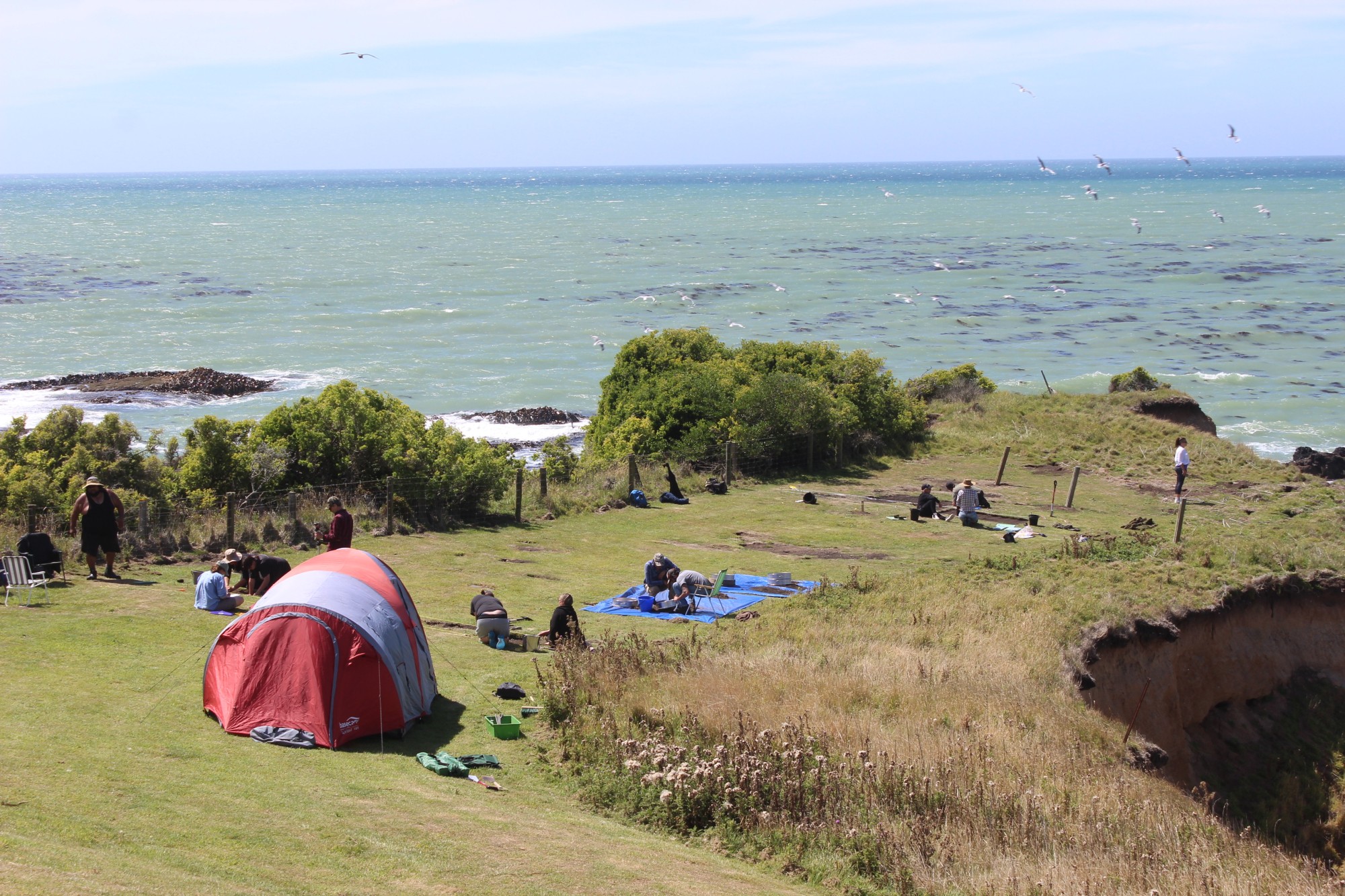
Tikoraki is an urupā reserve atop a headland that is dropping away as its clay cliffs are undercut by the sea. In contrast, Tūtakahikura (Barracouta Bay) is low lying with a sandy beach front that is being eroded at the sea's edge while the coastal flat inland is dug over by rabbits. In both sites, extensive archaeology deposits are exposed in the eroded edges and in material brought to the surface by rabbits.
Community Archaeology
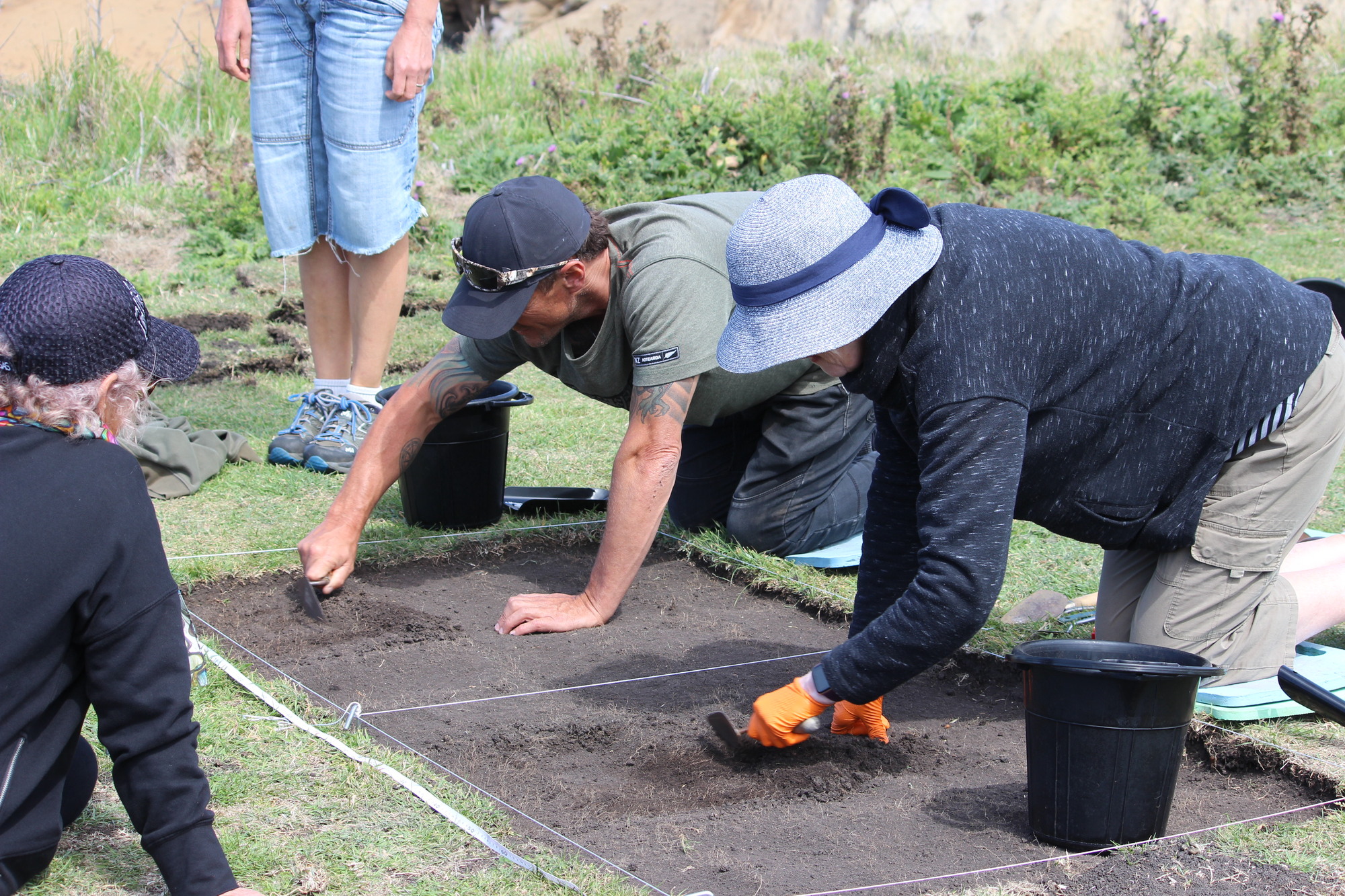
The community challenge is to recover the history before it is further damaged and lost. Doing so also creates opportunities for communities to develop understanding of archaeological research processes, which provide more direct information supporting heritage management for the sites. Whānau from Te Rūnanga o Moeraki were able to undertake a marae-based archaeological project at Tikoraki, drawing on the University and the Museum's professional support along with funding from 'Unlocking Curious Minds' through the Otago Participatory Science Platform.
Tikoraki is a headland in which an urupā (cemetery) was placed in the mid-1800s. A black layer of charcoal-stained soil shows, however, that in earlier times it was the scene of pre-European activity. Over two fieldwork seasons, whānau from the marae excavated alongside University and Museum staff to expose the residues of umu (earth ovens) and middens in different areas of the most at-risk end of the headland.
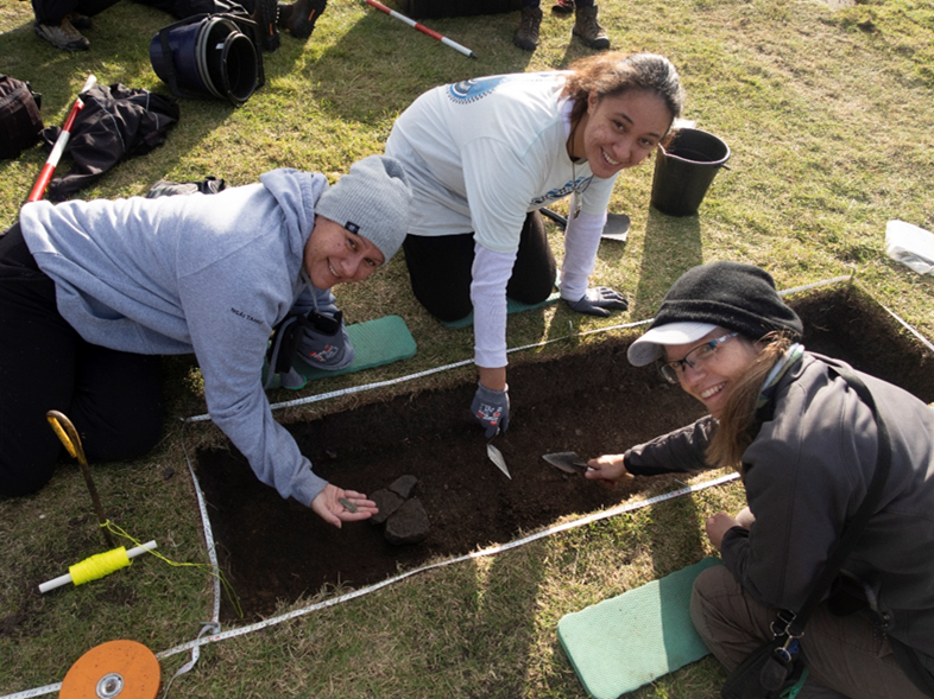
Trowelling and sieving on-site are the first steps in recovering archaeological information. All the samples need to then be taken to the laboratory for washing, sorting, and detailed identification, cataloguing, and analysis. Whānau from the marae joined in this mahi in the labs, gaining valuable first-hand experience. Interviews with whānau conducted during the lab session featured on Radio NZ's 'Our Changing World'.
https://www.rnz.co.nz/national/programmes/ourchangingworld/audio/2018834132/the-first-glance
What Did We Learn
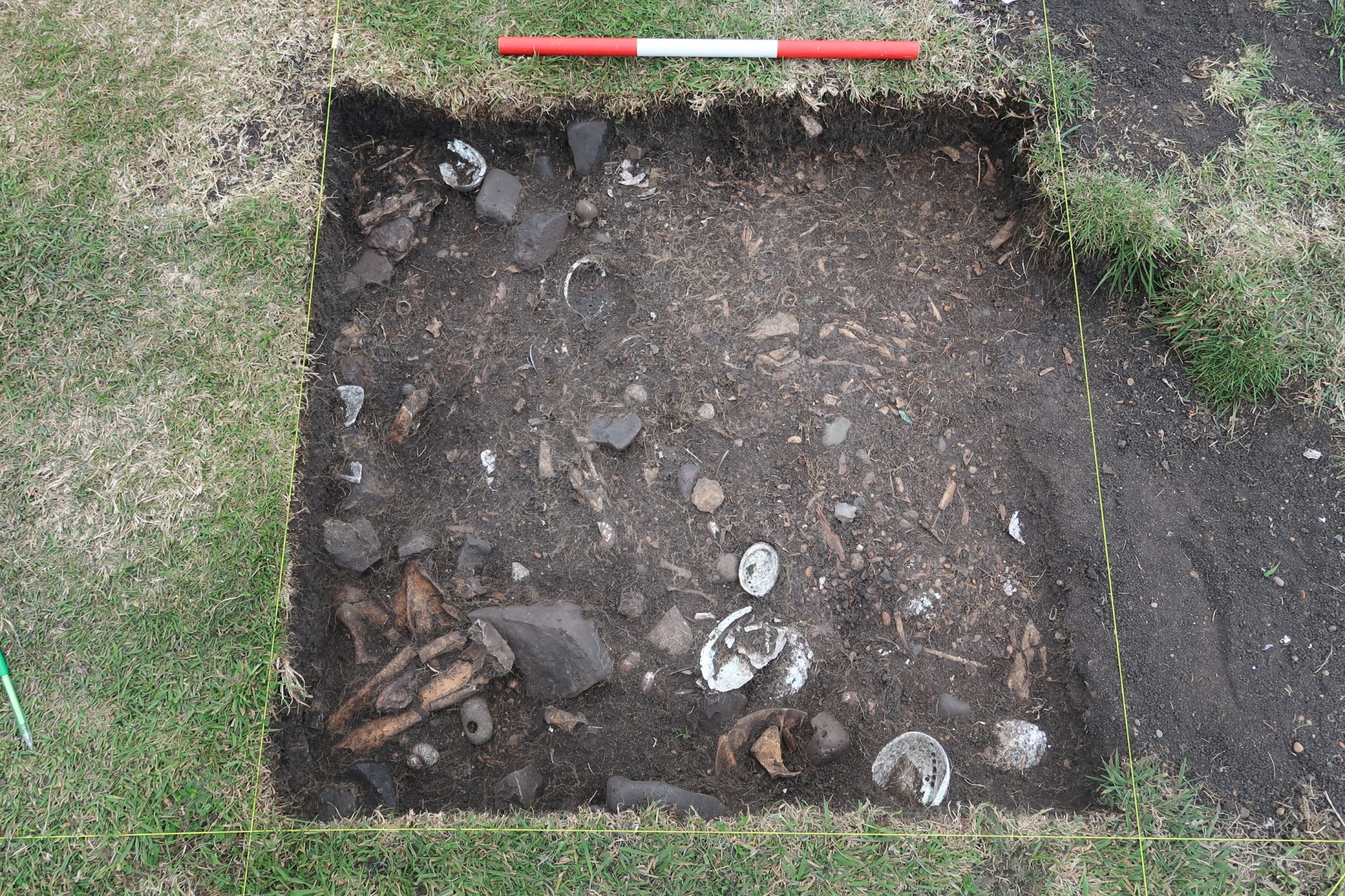
Radiocarbon dates on material excavated from two different areas show that Tikoraki was occupied during the late pre-European period, mostly between AD 1600 and 1680. However, material from one area is a bit older than that from the other, which indicates smaller-scale occupations at different times rather than a single period of more expansive settlement across the headland. Animal remains show seals, birds, and fish were being locally exploited as well as both rocky shore and sandy shore shellfish. The artefacts show local stone resources were being utilised at the time, but that kā tūpuna also had access to obsidian from the North Island and pounamu from elsewhere in the South Island.
Learning in the Field
Tūtakahikura (Barracouta Bay) is one of the beaches fronting the old kaik (village) that was established in the 1830s and became the major Kāi Tahu settlement in North Otago through the 19th century. This is reflected in the local archaeology, with bottles, ceramics, coins, and 19th or early 20th-century metalware having been found. However, there was also an earlier occupation at a time when kā tūpuna were still making and using stone artefacts, including local chert-like rocks for blades, and pounamu chisels. Many of these earlier artefacts, along with midden and umu stones, have been brought to the surface by extensive rabbit burrowing.
Recovering this archaeology has been a focus of University of Otago field schools, where archaeology students have an opportunity to learn from direct hands-on experience in excavating while also contributing to efforts to salvage at-risk heritage. This learning opportunity has also been extended to kaitiaki across Kāi Tahu as part of a joint initiative with Te Rūnanga o Moeraki. These kaitiaki work at the coal face with archaeologists, making decisions about wāhi tupuna, and benefit from a deeper experience of archaeological processes, which they can apply to projects at their own marae. With students and kaitiaki learning side by side, this grows the people needed to confront the increasing impact of sea level change on wāhi tūpuna across all of Te Waipounamu's coasts.
Initial results from Tūtakahikura suggest that like Tikoraki, the pre-European material indicates a similar pattern of dispersed umu with associated midden remains representing various locally accessible resources. Future work at Tūtakahikura will continue to examine the pre-European heritage as well as explore the archaeological heritage of a 19th-century Māori kaik.
