Kā Uika me te Uruka ki te Kōhika
Collection Enquiries and Access
-thomson-collection_-otago-museum-collection-d25.2205.jpg)
If you have general enquiries about our collections or individual taoka, please contact us.
For physical access to the collection items, or access to their images and data, you will need to complete an access request form, which will be circulated to the relevant curator, collection manager, and conservator, and then to the director for recommendations and/or approval. Further approvals from Te Pae Ārahi o Tūhura and/or relevant whānau, rūnaka, or iwi might also be required for access to taoka Māori. The approval of relevant Pasifika and/or other communities may also be sought where appropriate.
Access request formTāpaetaka Taoka
Bringing Objects In
In Person Enquiries and Offers to Donate
There are several reasons why you might want to bring items into the Museum:
We can assist with the identification of cultural objects and natural science items*.
We are a Public Museum authorised to receive taoka tūturu under the Protected Objects Act (1975).
We accept native birds on behalf of the Komiti Taoka Tuku Iho*
We are a Public Museum authorised to receive native species under the Wildlife Act (1953) and the Marine Mammals Protection Act (1978)*
We are happy to consider donations to the collection*;
*(Please do not bring live animals to the museum!)
There are processes that must be followed for the safety of the items and to ensure everything is documented appropriately.
We are a small, busy team and cannot always be available without prior arrangement. Our front of house staff cannot receive objects directly - they must be received by one of the Collections team.
Please plan ahead and make an appointment to bring items into the Museum so we can ensure that the relevant member of the Collections Team can be there to examine what you have and, if appropriate, receive it from you. If it is received, you will be asked to complete an Item Receipt Form.
Tautohutaka
Identification
If you have a natural history specimen such as an invertebrate, bird, mammal, or rock that you would like to have identified, or a special human-made object that you would like more information about, please first contact one of our Curators. They might be able to help you by looking at photographs or can arrange a time with you to bring the object in to look at.
The Curator might be able to give you all the information you need after seeing the item. If, however, it requires more research, the item might be taken temporarily into Museum custody while that work is being done. You would be asked to sign an Item Receipt Form which states it is in our temporary custody and will be returned to you. You will then have one month to retrieve the item.
-
All newly found Māori artefacts must be reported to a qualified museum.
If taoka have been found somewhere, whether on your land or on a beach, they may be considered taoka tūturu under the Protected Objects Act 1975. Tūhura Otago Museum can receive such taoka in order to notify the Ministry of Culture and Heritage, which will determine who should have custody of them.
See Manatū Taonga Ministry for Culture and Heritage for further information.
-
Most of Aotearoa New Zealand’s native animals, alive or dead, are protected by the Wildlife Act 1953 and cannot be held without a permit. If you are not sure if the animal you have found is native or introduced, you can contact us for more information. We are happy to help with identification.
We are a public museum authorised to receive native species under the Wildlife Act (1953) and the Marine Mammals Act (1978).
Please do not bring live animals to the Museum! If you have found a live animal and are concerned for its wellbeing or the wellbeing of people nearby, please contact the Department of Conservation on 0800 275 362 (general enquiries) or 0800 362 468 (emergency hotline).
-
Under the Ngāi Tahu Claims Settlement Act 1998, many native species are recognised as taoka species because they have special significance to local iwi. If you are uncertain about whether an animal you have found is a taoka species, you are welcome to contact us, and we will be happy to help you.
Komiti Taoka Tuku Iho and DOC facilitate the allocation of taoka species in Otago.
Native bird specimens brought into the Museum can be received on behalf of Komiti Taoka Tuku Iho for cultural use of the animals in traditional ways, such as the use of native bird feathers for special weaving projects.
If you would like to apply to the committee for cultural or scientific use of these birds, then please contact the committee here:
-
If you have something you would like to donate, please first contact one of our curators. The curator will let you know if it might be something that would fit our collection and invite you to make an appointment.
We are grateful for your generosity, but please understand that we cannot accept everything offered to us.
Acceptance of item(s) offered to the collection is at the discretion of the relevant curator, providing that the item(s) on offer align with the Museum’s Collections Policy
If an item brought in for assessment is going to be held in the Museum while that work happens, you will be asked to sign an item receipt form. This does not guarantee that the object will be accepted, but just states that it is in our temporary custody while being more fully considered and due diligence is done.
If the item is accepted for the collection, you will be notified. If not, you will be contacted to arrange the return of the item, or it will be used or disposed of in the manner that you would have indicated on the item receipt form.
Once the item is formally accessioned into the collection, there is no guarantee that it will go on display. It might be kept as an important resource for researchers, for possible loan requests, or for potential future exhibitions.
Please contact the Museum at [email protected] if you would like to donate an object to our collection.
Collection Access
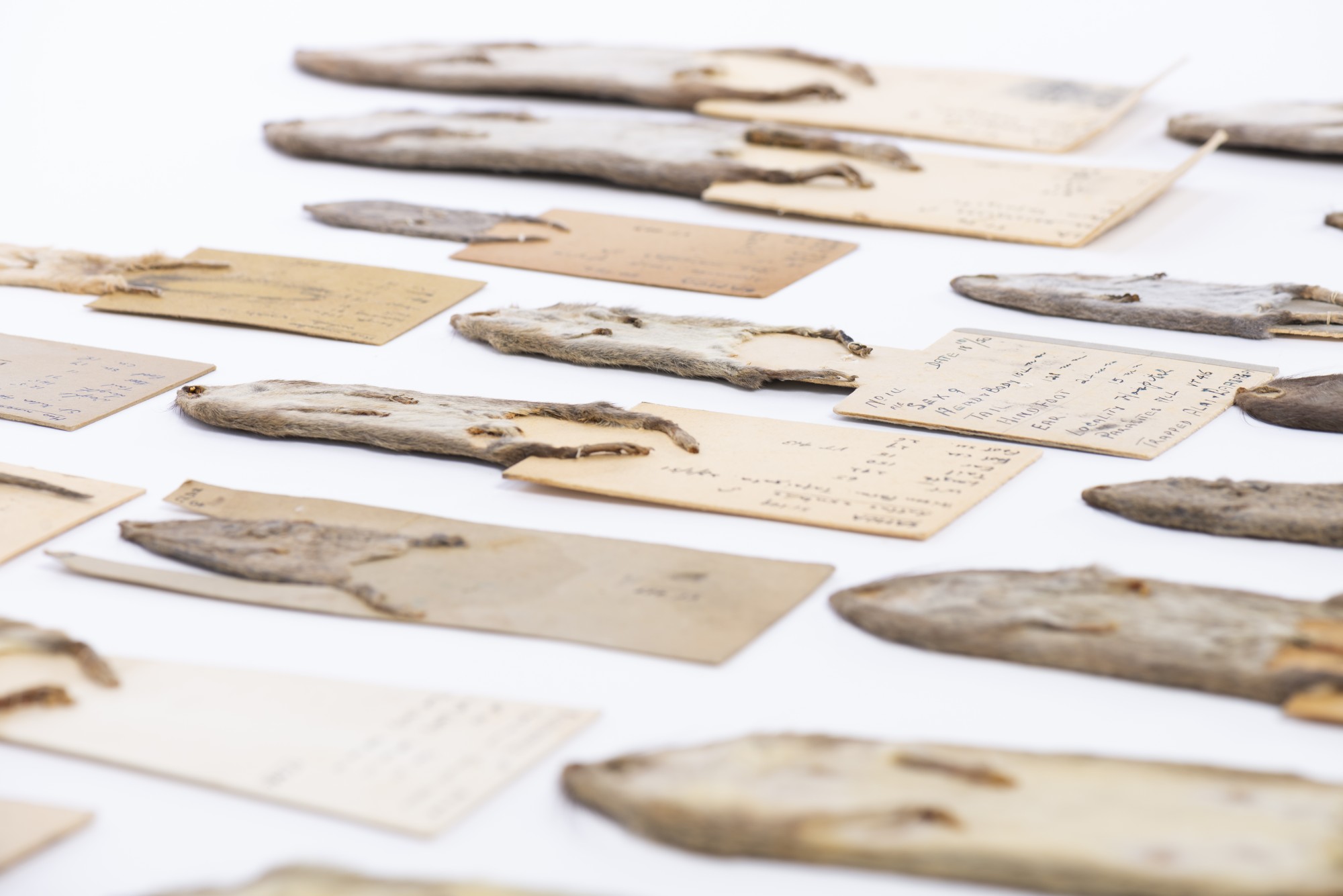
For physical access to the collection items, or access to their images and data, you will need to complete an access request form, which will be circulated to the relevant curator, collection manager, and conservator, and then to the director for recommendations and/or approval.
Further approvals from Te Pae Ārahi o Tūhura and/or relevant whānau, rūnaka, or iwi might also be required for access to taoka Māori. The approval of relevant Pasifika and/or other communities may also be sought where appropriate.
Kā Mōtika me Kā Whakaaetaka
Rights and Permissions
Much of the material available on this website is subject to copyright (all rights reserved). That copyright is either held by the Museum, or by a third party, which has given permission for the material to be reproduced on this website.
-
This statement means that the work is subject to copyright. It means that the work may not be copied, reproduced, or communicated without the copyright owner’s permission, except for purposes related to fair dealing, as defined by the New Zealand Copyright Act 1994.
-
Some images of taoka Māori are restricted for cultural reasons. Images of taoka are of significant cultural importance to iwi. The Museum provides images of taoka and associated information for research, study, personal, and educational use only.
-
This is a Creative Commons Attribution 4.0 International licence (CC BY NC 4.0). It is used on images of objects for which there is no copyright, or where the Museum is the sole copyright owner.
This licence is also used on images of works for which copyright has expired. This licence allows reuse, sharing, and non-commercial use, provided that the Museum is attributed.
-
This statement means that to the best of our knowledge, the Museum is unaware of any copyright restrictions on a work. This might be because its copyright term has expired. This term predominately applies to reproductions of two-dimensional works (e.g. paintings, photographs, posters) that are out of copyright under the New Zealand Copyright Act 1994.
-
This statement applies to works that are considered orphan works. This means the Museum has reproduced the work after a reasonable and documented effort to trace the copyright owner. Where the copyright in any material belongs to a third party, reasonable effort has been made to identify the copyright owner.
If you are the owner of copyrighted material which you believe is available on this website in a way that constitutes an infringement of that copyright, or a breach of an agreed licence or contract, please notify [email protected].