
Waikaia Moa Leg
Published: 9 June 2025
During the Central Otago gold rush, many men who came seeking fortune also made significant natural discoveries. One such find was made by Mr McLeod, who was working the goldfields near Waikaia. Around 1890, while exploring the rock shelters and caves above the river, he discovered the nearly complete leg of an upland moa (Megalapteryx didinus). Remarkably, the leg still retained dried flesh, skin, feathers, tendons, and muscles.
Augustus Hamilton (1853-1913), a New Zealand ethnologist and naturalist, visited Waikaia after hearing about this discovery. He was shown various sites containing natural deposits of bones and feathers high up in the Old Man Range.
Hamilton described his trip to the Old Man Range in a report to the Otago Institute in 1894, outlining the conditions under which the leg and the small caves were first discovered. According to his account, several years before his visit, an accidental fire - started by miners - burned all the bush off the range. Before the fire, the area (apart from the highest elevations) had been covered in dense Nothofagus (beech) forest. The destruction of this forest dramatically altered the landscape around Waikaia and the Whitcomb Ridge forever. By the time of Hamilton's visit, the primary vegetation consisted of ferns and early-stage regenerating plants.
In his report, Hamilton speculated that more remains of the moa whose leg is now on display in the Southern Land, Southern People Gallery at Tuhura may have once existed but were likely destroyed in the fire.
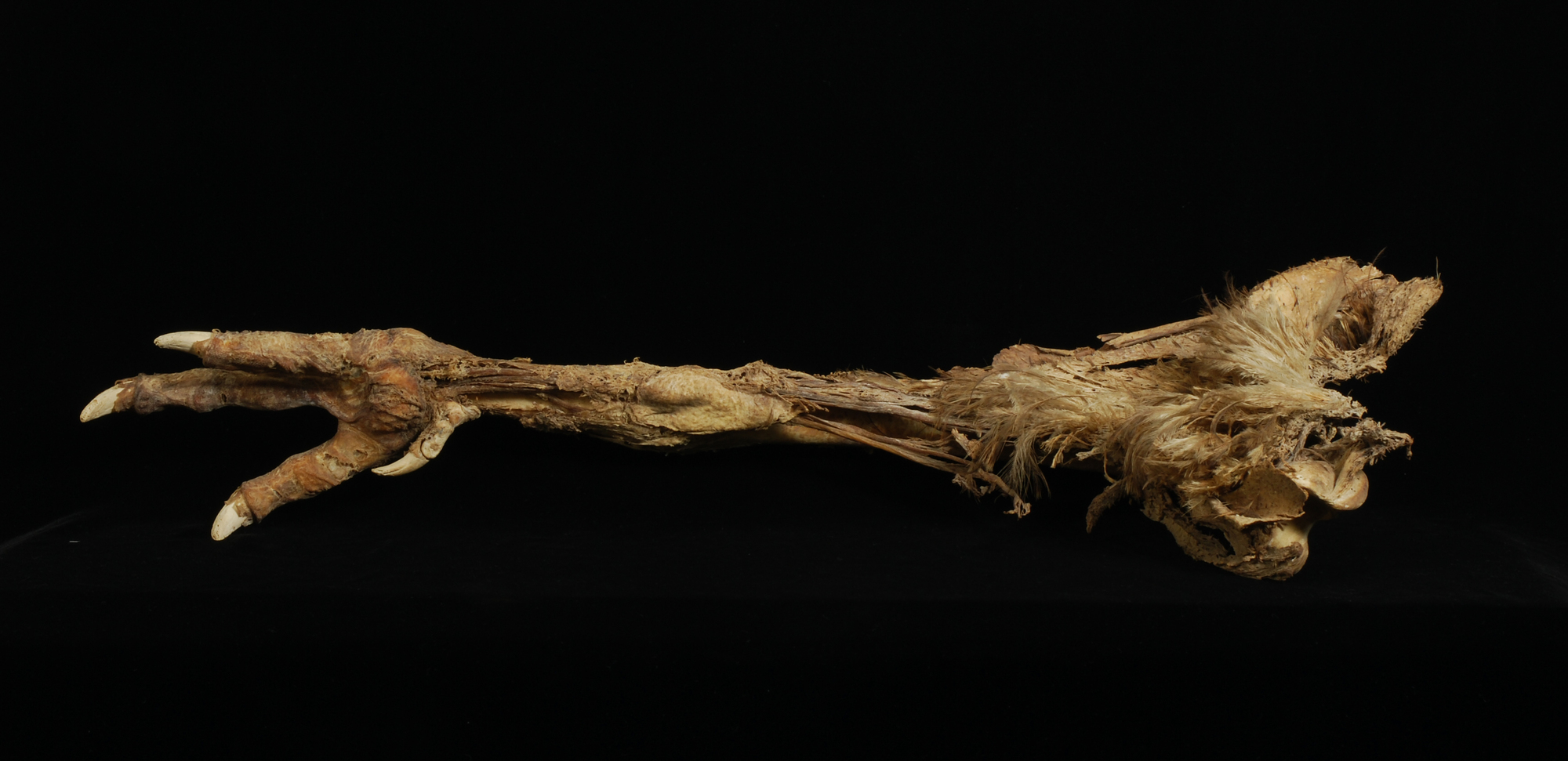
The leg itself is an extraordinary specimen. Most of its feathers are various shades of brown with whitish tips, measuring about 5 mm wide. Some of the best-preserved feathers exhibit a double-shafted structure. One particularly striking feather on the leg has a purple hue, offering a glimpse into what these iconic birds might have looked like. The presence of feathers extending all the way down to the foot suggests an adaptation to the cold, mountainous environment of New Zealand.
There is very little muscle tissue remaining on the upper portion of the leg, leading to speculation that it may have belonged to a hunted moa. However, there are no visible butchery marks or cut marks on the bone. The idea remains plausible, as radiocarbon dating of the tissue indicates that the leg was deposited between AD 1300 and 1420, an early period of human occupation in New Zealand. Maori first arrived in the country between AD 1250 and 1300, and archaeological evidence of moa-hunting sites has been found on the ridges in the surrounding areas. This suggests that both moa and early Maori likely used these sites as summer feeding and hunting grounds.
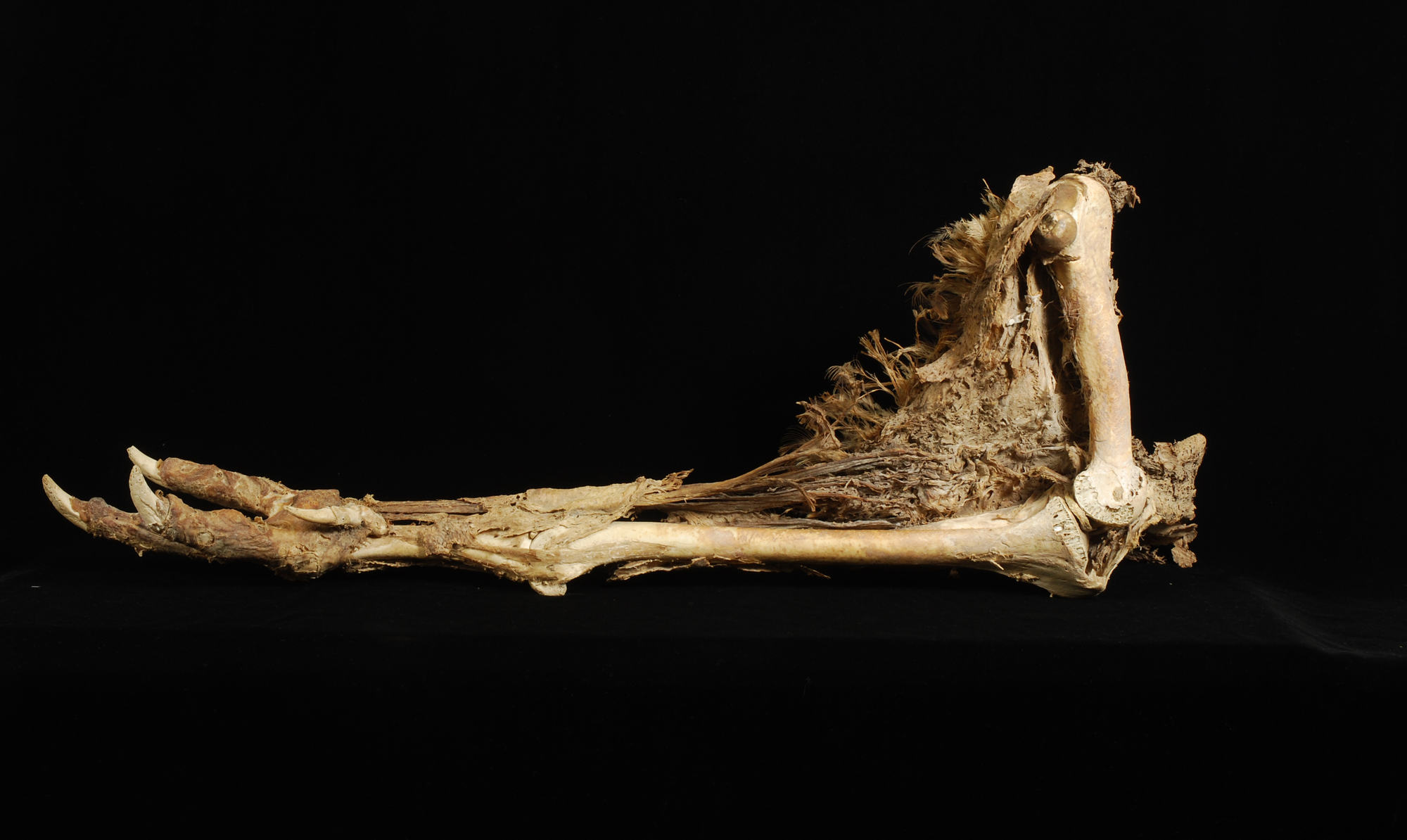
This leg is an incredible piece of history and can be viewed in the cave area of the Southern Land, Southern People Gallery.
On: 9 June 2025
Category:
